
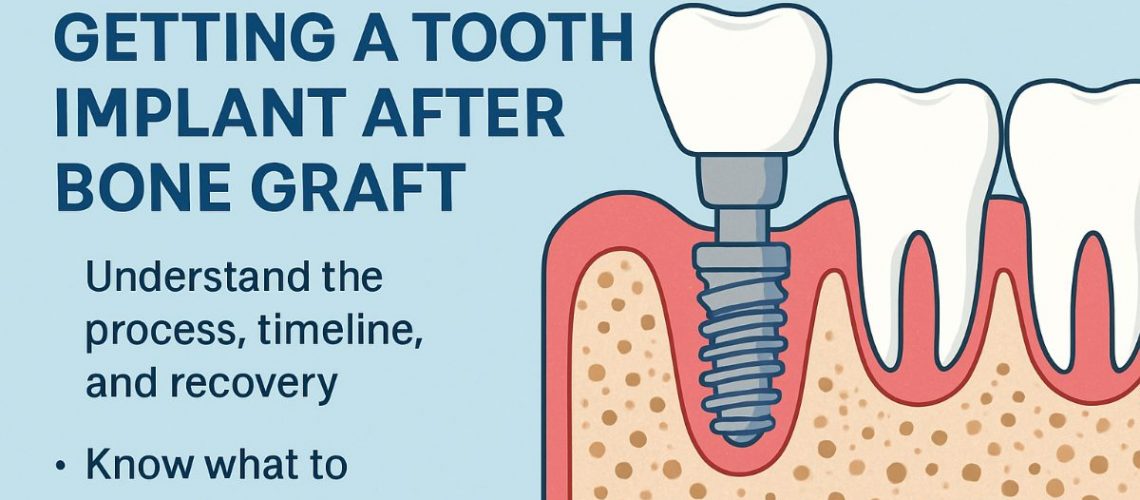
If you're facing a tooth implant after bone graft, this post explains what that means, why grafts are used, and what to expect from start to finish. Bone grafts rebuild lost jawbone so an implant has enough support. Below you'll find a practical timeline, typical recovery steps, common risks, and clear signs for when to call your dentist.
What to expect: tooth implant after bone graft — the typical timeline
Before the graft
Before any procedure you’ll meet for a pre-op consult. Expect medical history review, oral exam, and 3D imaging (CBCT) to map bone volume and nerve/sinus locations. Your dentist will discuss graft type (socket graft, block graft, or sinus lift), estimated timeline, and whether a tooth extraction and graft will happen the same day. Health checks may include blood sugar control and smoking counseling, since these affect healing.
Bone graft healing stages (weeks to months)
Healing varies by graft size and location:
- Minor grafts (socket preservation): often 4–6 weeks before the site shows early bone formation.
- Larger grafts or block grafts: commonly 3–6 months to mature enough for an implant.
- Sinus lifts: usually 4–9 months depending on how much lift and bone is needed.
Your dentist will use follow-up exams and imaging to confirm the graft has integrated and has enough bone density for implant placement.
Placing the implant after graft
When the graft is ready, implant surgery is scheduled. The dentist places a titanium implant into the healed bone under local anesthesia (sedation optional). You may get a temporary tooth if needed for aesthetics. After placement, the implant needs time to osseointegrate — attach to the bone — which typically takes 3–6 months. Once stable, your dentist will take impressions or digital scans for the final crown or bridge.
What recovery looks like right after surgery
Short-term symptoms are normal. You can expect:
- Mild to moderate pain for 48–72 hours (controlled with prescribed or over-the-counter meds).
- Swelling and possible bruising peaking at 48–72 hours and improving over 1–2 weeks.
- Minor bleeding or oozing for the first 24 hours.
Practical care steps:
- Take medications as directed and use cold packs for the first 24–48 hours to reduce swelling.
- Eat soft foods for several days and avoid chewing on the surgical side until advised otherwise.
- Keep the area clean with gentle rinsing (salt water) and follow any special oral hygiene instructions from your dentist.
- Attend scheduled follow-up visits so your dentist can monitor healing and remove sutures if needed.
Most people return to normal light activities within a few days and resume full eating habits gradually as healing allows, often over 4–12 weeks depending on the procedure.
Risks, signs of problems, and factors that change the process
Complications are uncommon but important to spot early. Call your dentist right away for:
- Increasing or severe pain after initial improvement
- Fever or chills
- Persistent pus, bad taste, or swelling that worsens
- Looseness or movement of the implant or graft
Things that can lengthen healing or raise risk include smoking, uncontrolled diabetes, poor oral hygiene, and low bone quality. When properly planned with good health control and modern imaging, success rates for bone grafts and implants are high — often above 90% for routine cases.
Choosing your provider and next steps (light practice mention)
Experience with both grafts and implants matters. At your consultation ask about:
- Which graft type they recommend and why
- Expected timeline from graft to final crown
- Success rates and examples (before/after or patient reviews)
- Imaging used (CBCT) and who performs the surgery
If you live near St. Charles and want a local evaluation, ask about financing and insurance options and schedule a CBCT-based assessment. A clear plan from a team experienced in grafting and implant restoration makes the process predictable and comfortable. For questions about a tooth implant after bone graft in St. Charles, IL, or to book an evaluation, contact Core Dental of St. Charles to learn your next steps.