
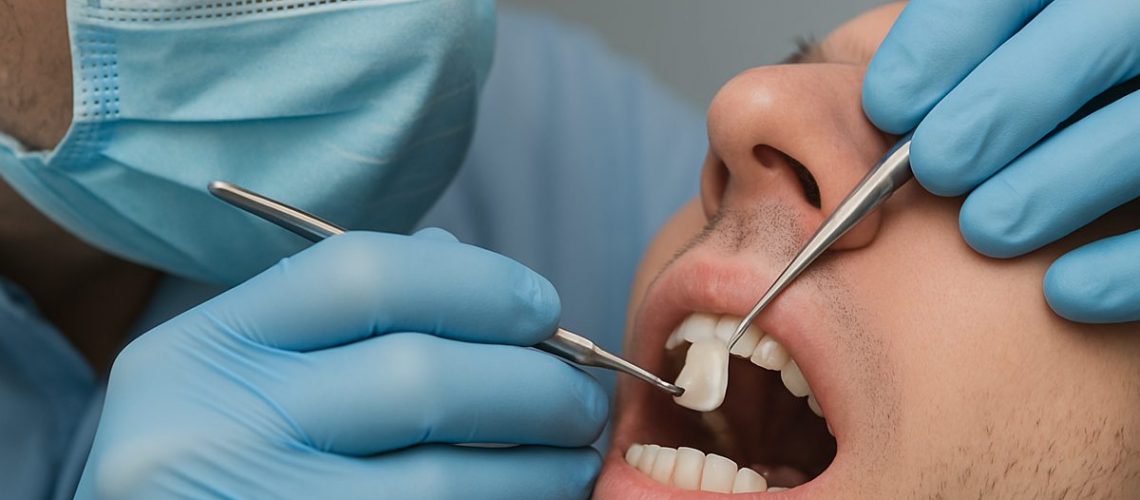
If you’re looking to improve your smile, a porcelain veneer in St. Charles may be the solution. A porcelain veneer is a thin ceramic shell bonded to the front of a tooth to change its color, shape, or alignment. This guide explains who benefits from veneers, what to expect, and practical next steps to get started.
This post covers what a porcelain veneer is, common cosmetic problems they fix, how the process works, benefits and risks, care tips, and answers to common questions so you can decide if veneers are right for you.
What is a porcelain veneer?
A porcelain veneer is a custom-made, thin ceramic shell that covers the front surface of a tooth. It improves a tooth’s color, shape, and minor alignment without full crowns. The veneer is bonded to your enamel with strong dental cement, giving a natural look and durable finish. Many patients choose a porcelain veneer to get long-lasting color and a uniform smile.
Common cosmetic issues fixed with porcelain veneers
Stains and discoloration
When professional whitening can’t remove deep or resistant stains, a porcelain veneer in St. Charles provides permanent color correction. Porcelain resists stains from coffee, wine, and tobacco better than natural enamel.
Chips, cracks, and worn teeth
Veneers restore the shape of chipped or worn teeth and protect weakened enamel. They can make a damaged tooth look whole again without extensive rebuilding.
Gaps and minor misalignment
Small spaces between teeth or slight misalignment can be corrected faster than with braces. Alternatives include Invisalign® for alignment, composite bonding for minor fixes, or crowns when a tooth needs more coverage. A consultation can help decide whether a porcelain veneer or another option is best for your goals.
Am I a good candidate for a porcelain veneer?
Good candidates generally have:
- Overall healthy teeth and gums
- Minimal tooth decay
- Adequate enamel for bonding
- Realistic expectations about results and maintenance
Alternatives include Invisalign® for alignment, composite bonding for minor fixes, or crowns when a tooth needs more coverage. Veneers reshape teeth to create a more balanced, even smile when orthodontics aren’t needed for bite correction. A consultation can help decide whether a porcelain veneer or another option is best for your goals.
The porcelain veneer process: step-by-step
Consultation & digital imaging
Your first visit includes an exam and digital photos or 3D imaging to map your smile. Advanced imaging shows how veneers will look and helps plan precise adjustments. Many patients see a preview of expected results before treatment begins with a porcelain veneer in St. Charles.
Tooth preparation & impressions
Preparation is conservative. The dentist removes a thin layer of enamel to make room for the veneer. Then impressions or digital scans are taken so the lab can craft custom veneers that match your teeth and bite.
Temporary veneers and final placement
While the lab creates your permanent veneers (usually 1–2 weeks), temporary veneers protect prepared teeth. At the try-in visit, the dentist checks fit and color, then bonds the final veneers using a strong resin cement for a secure, natural finish.
Benefits and risks of porcelain veneers
- Benefits: natural appearance, stain resistance, durable, quick smile makeover
- Risks: irreversible enamel removal, temporary sensitivity, possible chips or fractures, eventual replacement (10–15+ years depending on care)
Care and maintenance for your porcelain veneers
- Brush twice daily and floss once daily
- Avoid biting hard objects (ice, pens, fingernails)
- Use a nightguard if you grind your teeth
- Keep regular dental checkups and cleanings
With proper care, veneers can last many years and continue to look natural and bright.
Frequently asked questions about porcelain veneer
How long do veneers last? Most veneers last 10–15 years, sometimes longer with good care.
Will veneers look natural? Yes. Porcelain mimics the light-reflecting properties of natural enamel for a realistic look.
Are veneers painful to get? No. Most people feel mild sensitivity during and after preparation, which fades. Local anesthesia reduces discomfort during the procedure.
Does dental insurance cover porcelain veneers? Insurance often views veneers as cosmetic and may not cover them. Check your plan or ask about financing and in-house options.
Why choose Core Dental of St. Charles for porcelain veneers
Core Dental of St. Charles brings 35+ years of family care and modern technology to cosmetic dentistry. Dr. Christopher Doran and Dr. Claire Sheehan use 3D digital imaging and custom planning to design veneers that fit your smile and function. The practice offers in-house cosmetic options, sedation for anxious patients, and flexible payment choices to make care accessible.
Next steps: schedule a porcelain veneer consultation
If you’re ready to explore a porcelain veneer in St. Charles, schedule a consultation to review imaging, discuss goals, and get a personalized plan. Contact Core Dental of St. Charles to book a visit and find out if veneers are right for you.